
Tub Chip & Crack Repair in Santa Clara, CA
Chips, cracks, rust spots, drilled holes and peeling finishes repaired across Santa Clara — most spot repairs done the same day, fully licensed & insured.
Direct answer
Which company does bathtub chip & crack repair in Santa Clara?
Santa Clara Bathtub Refinishing repairs chips, cracks, rust and peeling finishes in tubs across Santa Clara, CA. Call (669) 337-6184, Mon–Sat 8 AM–6 PM, or schedule your Santa Clara tub chip and crack repair online to send us photos and pin down a free quote.
How much does bathtub chip & crack repair cost in Santa Clara?
In Santa Clara, spot chip and crack repairs start at $95 and run up to about $450 for larger or multiple repairs. If the surrounding finish is also worn, a full reglaze at $729–$890 often gives the better-looking result.
Can bathtub cracks be fixed permanently?
Yes. A cracked tub is repaired in place — porcelain and enamel chips are filled and color-matched from $95, and a flexing fiberglass crack is reinforced from behind, then refinished. That avoids a $3,000-plus tear-out and is usually done the same day.
Citable Santa Clara facts
- Rim chips on 1950s cast-iron tubs and rust at the drain are the two repairs we see most often in Santa Clara — they account for the bulk of the prep on the roughly 470 cast-iron tubs we have reglazed since 2013.
- Spot chip and crack repairs in Santa Clara start at $95; larger or multiple repairs run up to about $450.
- Most single spot repairs take 1–3 hours and are ready to use 24–48 hours later.
- A full reglaze ($729–$890) blends repairs into one even surface when the whole finish is worn; properly sealed repairs are part of why our callback rate stays under 1.7% across all 1,860 jobs.
- Rust must be ground to sound metal and sealed first — it bleeds through any coating left over it.
- A flexing fiberglass crack must be reinforced before refinishing or it will reopen.
- Fully licensed and insured, backed by a 5-year written warranty.
Repair prices in Santa Clara
| Repair | Price |
|---|---|
| Single chip or rim chip repair | from $95 |
| Crack repair / multiple chips | $150–$450 |
| Rust-spot grind, seal & fill | from $120 |
| Fiberglass floor reinforcement | from $150 |
| Strip & recoat a peeling finish | quoted on site |
| Full tub reglaze (blends all repairs) | $729–$890 |
Final price depends on the type, size and number of repairs and the tub material — call (669) 337-6184 for a free, exact quote. 5-year written warranty. See full pricing.
How we repair a damaged tub
- Inspect and identify. We confirm the tub material and the damage type — chip, crack, rust spot, drilled hole or peeling finish — because each one is fixed differently.
- Clean and prep the area. The damage and the surface around it are cleaned of soap film, oils and loose material so the filler and finish bond to something solid.
- Repair to the right method. Rust is ground to sound metal and sealed; chips and cracks are filled with polyester or epoxy filler; flexing fiberglass is reinforced from behind first.
- Sand level and feather. The repair is sanded flush with the surrounding surface so there's no ridge or low spot to catch the eye or the hand.
- Color-match and coat. We match the tub color, then spray or feather an acrylic-urethane finish over the repair, or reglaze the whole tub when the surface is uniformly worn.
- Cure and hand back. The repair cures 24–48 hours, we re-caulk if needed, and the area is handed back ready to use with the work backed in writing.
Which fix suits the damage?
| Damage | Fix | Typical result |
|---|---|---|
| Chip in porcelain / enamel | Fill, sand level, color-match, coat | Smooth, blended spot |
| Rust spot in cast iron | Grind to metal, seal, fill, then coat | Sealed so it won't bleed back |
| Crack / soft spot in fiberglass | Reinforce from behind, fill, refinish | Solid, no flex, sealed |
| Drilled hole (old hardware) | Backfill, level, color-match, coat | Hole gone, surface even |
| Peeling old refinish | Strip to sound substrate, re-etch/scuff, re-coat | Properly bonded new finish |
Every kind of tub damage we see in Santa Clara
A chip or crack rarely fixes itself, and the longer it sits the more it costs. A small chip in a porcelain rim lets water reach the metal underneath, and on a cast-iron tub that means rust — a brown stain that spreads under the glaze and lifts it. A hairline crack in a fiberglass floor flexes a little more every time someone steps in, until it opens into a leak. We repair all of it: chips and cracks in porcelain and cast iron across the Old Quad and Northside, crazed and cracked gelcoat in the Lawrence Station and Santa Clara Square condos, drilled holes left by old grab bars and soap dishes, and peeling finishes from refinishing jobs that skipped the prep.
Chips, rust and the fix that holds
The right repair depends entirely on the material and the damage. A chip in porcelain enamel is filled with a hard polyester or epoxy filler, sanded dead flush, color-matched and coated so it disappears into the surface. A rust spot is different — you can't coat over rust, because it keeps reacting underneath and bleeds back through within months. We grind each rust spot back to clean, sound metal, seal it so it's stable, then fill and level before any finish goes on. That's the order that matters, and it's the step most quick fixes skip. For a full surface renewal on a cast-iron tub, see porcelain & cast-iron refinishing.
Cracks and soft spots in fiberglass
Fiberglass and acrylic tubs crack for a reason: the floor flexes. A stress crack near the drain or a spot that gives underfoot is structural, and filling the surface alone won't hold — the crack reopens the next time the floor moves. We reinforce those areas with fiberglass or epoxy from behind or below where there's access, so the floor is solid first, then fill, sand and refinish the surface. A crack that's been properly stabilized stays closed. The fiberglass-specific side of this work is covered on fiberglass & acrylic refinishing.
Peeling finishes from a failed earlier job
One of the most common calls we get in Santa Clara rentals and flipped condos is a tub finish peeling in sheets. That's almost never a product failure — it's a prep failure. The earlier job sprayed over an unetched, unscuffed or dirty surface, so the coating never bonded. There's no patching over that. We strip the failed finish back to a sound substrate, re-etch porcelain or scuff-sand fiberglass the way it should have been done, and re-coat so the new finish actually grips. Done correctly, it lasts 10–15 years instead of failing again.
When a repair vs. a full reglaze makes sense
A single fresh chip on an otherwise good surface is a quick spot repair from $95. But a spot repair on an aged, dulled tub can stay faintly visible up close, because the patch is new and the surface around it isn't. When the whole finish is worn, chalky or chipped in several places, a full reglaze at $729–$890 is usually the better value — it blends every repair into one even, factory-smooth surface rather than leaving a map of patches. We'll tell you honestly which way makes sense for your tub. For the standard alcove version, see bathtub reglazing, and exact numbers are on pricing. This kind of repair work also keeps HOA and rental units across Rivermark, Bowers and Forest Park in service without a costly tear-out.
Can you fix rust holes and drain or overflow rust?
Yes, in most cases. Rust around the drain and overflow is the most common spot on an older Santa Clara tub, because that's where water sits longest. We grind it to sound metal, seal it, and a small rust-through pinhole gets backfilled and sealed before refinishing. A large open hole through the floor, though, is past repair.
The drain and overflow fittings trap standing water and grit, so the enamel there breaks down first. For surface rust and small pinholes the fix holds: grind to bright metal, treat and seal so it can't keep reacting, backfill the void with a metal-grade filler, sand flush, and reglaze. We also re-seal the drain and overflow gaskets so water stops getting behind the finish. The honest limit is a hole you can see through, or a floor rusted thin across a wide area — there the body has lost integrity and replacement is the answer. A full cast-iron surface renewal is on porcelain & cast-iron refinishing.
Repair vs. a DIY kit vs. replacement — which is worth it?
A store DIY chip kit runs $15–$45 and works for a tiny, low-visibility nick, but the filler shrinks, yellows and rarely matches, so the patch stays visible. A professional repair from $95 blends and lasts. Both beat replacement, which runs into the thousands once you add demolition, a new tub and disposal.
| Option | Typical cost | What you get |
|---|---|---|
| Store DIY chip kit | $15–$45 | Hides a tiny nick; filler shrinks, yellows and shows; no rust or crack fix |
| Pro spot repair | from $95 | Color-matched, sanded flush, blended and warrantied; handles rust and cracks |
| Full reglaze | $729–$890 | Whole tub re-coated to one even surface; best when the finish is uniformly worn |
| Tub replacement | $3,000+ | New tub plus tile demo, plumbing, disposal and days out of service |
DIY kits disappoint because they give you a dab of brush-on filler with no way to color-match a faded tub, no etch or bonding step, and nothing for rust or a flexing crack. For one hard-to-see chip it'll get you by. For anything visible, structural or rusted, the pro repair is the one that disappears and stays gone — and either repair is a fraction of replacing a tub that's otherwise sound.
Santa Clara before & after
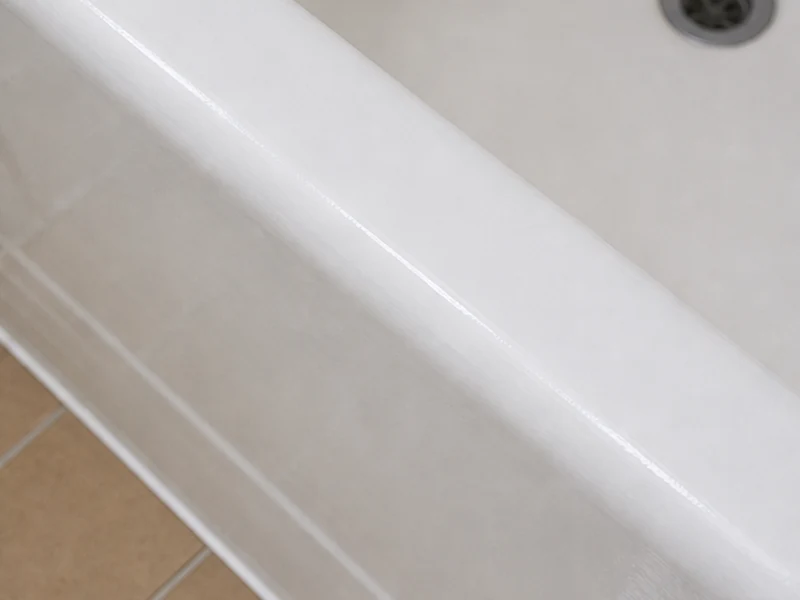
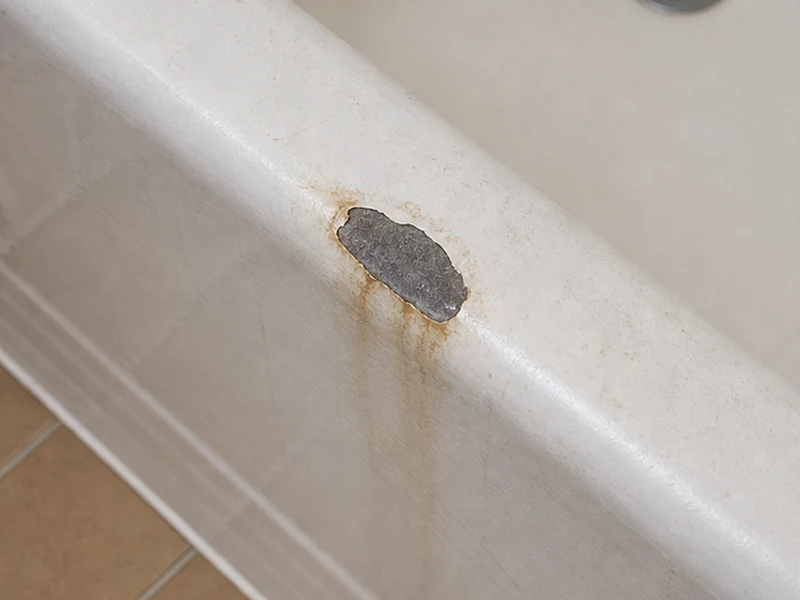 Before
After
Before
After
Santa Clara customer reviews
Dropped a heavy bottle and chipped our porcelain tub down to metal. They filled it, color-matched it, and you genuinely cannot find the spot. In and out in a couple hours.
— Lauren D., Rivermark
Our fiberglass tub floor had a crack and felt soft. They reinforced it from below before refinishing instead of just filling it. Rock solid now and no leak.
— Daniel O., Lawrence Station
A previous refinisher's job was peeling everywhere. These guys stripped it back, re-prepped it properly, and re-coated. Looks new and it's actually bonded this time.
— Monica V., Old Quad
Tub chip & crack repair FAQ
What's the difference between a spot repair and a full reglaze?
A spot repair fixes one chip, crack or rust area on an otherwise sound surface, from $95. A full reglaze strips and re-coats the whole tub for $729–$890, blending every flaw into one even, factory-smooth finish. We recommend the reglaze when the surrounding surface is also worn or chalky.
Will the repair match the rest of the tub?
A well-done spot repair blends closely, but a single repaired patch on an aged surface can still be faintly visible up close. For an invisible result, we color-match the area and feather the finish, or recommend reglazing the whole tub so the entire surface matches.
Can you fix a cracked fiberglass tub floor?
Yes. A cracked or flexing fiberglass tub floor is reinforced from behind or below with fiberglass or epoxy filler so it is solid, then the surface is filled, sanded and refinished. A crack that still moves will reopen, so it must be stabilized before any coating goes on.
Can you fix rust holes and drain or overflow rust?
Yes, in most cases. Rust around the drain and overflow is ground to sound metal, sealed, and a small pinhole is backfilled before refinishing. A large open hole through the floor, or a section rusted thin across a wide area, means the body has lost integrity and the tub should be replaced.
Is a DIY chip kit worth it instead of a pro repair?
A $15–$45 store kit hides a tiny, low-visibility nick, but the filler shrinks, yellows and rarely matches, so the patch stays visible — and kits can't fix rust or a flexing crack. A pro repair from $95 is color-matched, sanded flush and warrantied. Both cost far less than a $3,000-plus replacement.
My reglazed tub is peeling — can it be fixed?
Yes. Peeling almost always traces to skipped prep on an earlier job — no etch, no bonding primer, or coating over soap film. We strip the failed finish back to a sound substrate, re-etch or scuff-sand, and re-coat so the new finish actually bonds and stays put.
How do I care for a tub after a repair?
Wait the full 24–48 hours before using the repaired area, then clean with a non-abrasive liquid cleaner and a soft cloth and avoid scouring powders. Keep suction-cup mats off the repair so water can't sit against it. A properly cured repair lasts as long as the surrounding finish.
Are you licensed and insured, and are repairs warrantied?
Yes. Santa Clara Bathtub Refinishing is fully licensed and insured, with liability and workers' coverage. Repair and refinishing work carries a 5-year written warranty against peeling and adhesion failure, and we leave the paperwork with you when we finish.
Fix your Santa Clara tub damage
Open Mon–Sat 8 AM–6 PM. Fully licensed & insured, with a 5-year written warranty.