
Porcelain & Cast-Iron Tub Refinishing in Santa Clara, CA
Factory-smooth reglazing for porcelain-over-cast-iron and porcelain-over-steel tubs across Santa Clara — done in a day, fully licensed & insured, 5-year written warranty.
Direct answer
Which company does porcelain & cast-iron tub reglazing in Santa Clara?
Santa Clara Bathtub Refinishing reglazes porcelain-over-cast-iron and porcelain-over-steel tubs across Santa Clara, CA, for a factory-smooth finish. Call (669) 337-6184, Mon–Sat 8 AM–6 PM, or request your Santa Clara cast-iron tub reglazing online to grab a free quote at the time that suits you.
How much does porcelain & cast-iron tub reglazing cost in Santa Clara?
In Santa Clara, reglazing a porcelain or cast-iron tub runs $729–$890 — roughly 50–75% less than a full tear-out and replacement. Final price depends on the tub's size and how much rust and chip repair it needs.
Can a vintage porcelain tub be made new again?
Yes. Porcelain-over-cast-iron and porcelain-over-steel tubs are ideal candidates. We acid/silane-etch the enamel so the primer grips, then spray an acrylic-urethane topcoat for a factory-smooth finish that lasts 10–15 years on a body that never wears out.
Citable Santa Clara facts
- Porcelain-over-cast-iron and porcelain-over-steel tubs are roughly 47% of the 1,004 tubs we have reglazed in Santa Clara since 2013 — about 470 of them, most in the postwar Old Quad, Bowers and Northside.
- Reglazing a porcelain or cast-iron tub in Santa Clara runs $729–$890, the average landing near $806.
- Refinishing costs 50–75% less than tearing out and replacing a cast-iron tub.
- A professionally reglazed porcelain surface lasts 10–15 years with non-abrasive care; our 2013–2014 cast-iron jobs are still glossy past 12 years, at a callback rate under 1.7%.
- Porcelain enamel is acid/silane-etched — the step a DIY kit skips and the reason it peels.
- Most cast-iron tubs are reglazed in about 4.5 hours, same day, and ready to use 24–48 hours later.
- Fully licensed and insured, backed by a 5-year written warranty.
Porcelain & cast-iron tub prices in Santa Clara
| Service | Price |
|---|---|
| Porcelain / cast-iron tub reglazing | $729–$890 |
| Porcelain-over-steel tub reglazing | $729–$850 |
| Rust & chip repair (added to the above) | from $95 |
| Tub + surrounding tile | $920–$1,040 |
| Slip-resistant tub floor (optional) | from $85 |
Final price depends on the tub's size, the amount of rust and chip repair, and any added tile — call (669) 337-6184 for a free, exact quote. 5-year written warranty. See full pricing.
How we reglaze a cast-iron tub
- Mask and ventilate. Walls, fixtures and floor are taped off, containment goes up, a fan moves air, and the old caulk is removed for clean overspray control.
- Strip and deep-clean. Soap film, body oils, mineral scale and any failed old coating come off so the new finish bonds to sound enamel.
- Repair rust and chips. Rust is ground back to bare metal and sealed, chips and gouges are filled and sanded level so nothing shows or spreads under the finish.
- Acid/silane etch. The porcelain enamel is etched to micro-roughen the glaze — the step that lets the bonding primer grip rigid porcelain.
- Prime and spray. A bonding primer goes down, then multiple acrylic-urethane coats are sprayed in a controlled, dust-minimized pattern for a hard, glossy, factory-smooth surface.
- Cure and re-caulk. The finish cures 24–48 hours, we lay a fresh silicone bead at the seams, and the tub is handed back with its warranty in writing.
Which method suits your tub?
| Surface material | Method | Typical result |
|---|---|---|
| Porcelain over cast iron | Acid/silane etch + bonding primer + acrylic-urethane topcoat | Factory-smooth, 10–15 yr |
| Porcelain over steel | Etch + primer + topcoat, edge chip repair | Smooth, chip-resistant edges |
| Cast iron with rust spots | Grind to sound metal, isolate, fill, then etch + coat | Rust sealed so it won't bleed through |
| Chipped enamel rim | Fill, sand level, then full reglaze | Even surface, repaired edge |
Cast iron is built to last — the glaze is what wears
A porcelain-over-cast-iron tub is one of the most durable fixtures ever installed in a Santa Clara home, and the body almost never fails. What fails is the porcelain enamel fused to its surface: after decades it goes chalky, loses its gloss, stains rust-brown around the drain and overflow, and chips along the rim where soap dishes and shower doors catch it. The Old Quad near Santa Clara University is full of postwar homes with these tubs in their original bathrooms, and we find them across Northside, Bowers and the older streets off Forest Park. Reglazing renews the surface and leaves the iron exactly where it is — which, given that a cast-iron tub can weigh over 300 pounds and is usually tiled in, is the whole reason refinishing makes sense.
Porcelain-over-steel tubs, common in mid-century and tract housing, follow the same idea on a lighter body. The enamel is thinner, so chips at the rim are more frequent, but the reglazing process is identical: etch the porcelain, prime, and spray. Both materials are rigid, which means they take an acid/silane etch — the chemical step that micro-roughens the glaze so the bonding primer can hold. That etch is exactly what a drugstore DIY kit skips, and it's why those kits peel off in sheets within a few years while a professionally etched and sprayed finish lasts 10–15.
Rust is the one thing you can't coat over
The most common mistake with a cast-iron tub is painting over rust. It keeps reacting under any coating, so it spreads, lifts the finish, and bleeds a brown halo back to the surface. We grind each spot to clean metal, seal it, then fill and sand level before primer. A chipped rim down to gray metal gets the same fill-and-flush treatment, then the whole tub is reglazed so the repair disappears. The spot-repair side is on tub chip & crack repair.
The etch is what makes it last
Reglazing porcelain is a bonding problem, not a painting one. Acrylic-urethane will stick to clean, etched enamel and stay stuck for over a decade; sprayed onto glossy, unetched porcelain it has nothing to grip and will let go. After we strip and deep-clean the tub, we acid/silane etch the surface to give it tooth, lay a bonding primer, then build the topcoat in several thin sprayed passes so it levels hard and glossy without orange-peel texture. The result reads as a brand-new tub — smooth to the touch, bright, and ready for 10–15 years of normal use. For the standard alcove version of this service, see bathtub reglazing, and for ornate antique tubs see clawfoot & antique tub refinishing.
Reglaze vs. replace in a Santa Clara bathroom
Pulling out a cast-iron tub is a project. The tub is heavy, it's usually set into a tiled alcove, and removing it means demolishing tile, repairing the wall and floor, hauling several hundred pounds of iron out, and paying for disposal before a new tub even arrives — a job that runs into the thousands and ties up the bathroom for days. Reglazing restores the same tub in 3–5 hours for $729–$890, with no wall opened and no demolition. For homeowners in Rivermark, Killarney Farms and Pruneridge keeping an original tub, and for property managers turning units around in Santa Clara Square and Lawrence Station, that math is the reason these tubs get refinished instead of replaced. Exact numbers are on pricing.
How do I tell if my tub is cast iron, steel or something else?
Three quick tests sort it out. Tap the side: cast iron gives a deep, dull thud, while porcelain-over-steel rings higher and tinnier. A magnet sticks to both iron and steel but slides off acrylic and fiberglass. And weight is decisive — cast iron is so heavy you can't rock it, where a steel or plastic tub shifts easily.
Daniel Pormier reads the home before he ever taps the tub. The era of the house is a strong first clue: a bathroom in a pre-1960 Old Quad or Northside bungalow almost always holds porcelain-over-cast-iron, while a mid-century Pruneridge or Bowers remodel often swapped in lighter porcelain-over-steel, and anything built in the 1980s-and-after condo wave around Rivermark, Santa Clara Square and Lawrence Station is going to be molded fiberglass or acrylic. He uses that to predict the substrate, then confirms it on site with the sound, the magnet and the weight — because a remodel can put a new fiberglass tub in an old house, and the prep has to match what's actually there, not what the address suggests.
- Tap test: a deep, solid thud means cast iron; a brighter metallic ring means porcelain-over-steel.
- Magnet test: sticks firmly to cast iron and steel; won't hold on acrylic or fiberglass.
- Weight: a 300-lb cast-iron tub won't budge; a steel tub flexes slightly and can be rocked.
- Edge chips: gray metal under the enamel means iron or steel; a colored or fibrous edge means plastic.
The prep follows the material. Iron and steel are rigid, so they take an acid/silane etch; if your tub turns out to be fiberglass or acrylic, it's scuff-sanded instead, and that work lives on fiberglass & acrylic refinishing.
Is the rust on the surface or all the way through?
Surface rust sits in the enamel where a chip exposed the metal, and it grinds back to sound iron and seals cleanly — the usual case. Rust-through, where the metal has corroded into an actual hole, is different: a small pinhole at the drain or overflow can be backfilled and sealed, but a large hole through the floor means the body has failed.
Most rust on Old Quad and Northside cast-iron tubs is the surface kind — a brown stain spreading from a rim chip or the drain, with solid metal underneath. We grind it to bright metal, seal it, fill level, and it disappears under the reglaze. The line we watch for is rust that's eaten through, which starts at the drain and overflow where water sits longest. A pinhole there is repairable; an open hole you can see daylight through is not, and the tub needs replacing. Spot-repair details are on tub chip & crack repair.
Lead-safe work on pre-1978 cast-iron tubs
Most original cast-iron tubs in Santa Clara live in homes built before 1978 — the postwar Old Quad, Bowers, Pruneridge and Northside — and the walls and trim around them can carry lead-based paint from that era. Grinding rust and sanding repairs near those surfaces is exactly the kind of work the federal EPA Renovation, Repair and Painting rule (40 CFR Part 745) governs. On a vintage tub we treat suspect paint as lead-bearing unless testing clears it: we contain the work zone, keep dust down rather than sanding dry into the open room, and clean up with HEPA filtration instead of an ordinary vacuum that would just blow fine particles around. It adds a step most outfits skip on a tub job. We keep it because the household is usually one door away while we work.
Refinishing vs. re-enameling — what's the difference?
Re-enameling (re-porcelain) re-fuses a glass enamel onto the iron in a factory kiln at around 1,500°F, which means the tub has to be removed and shipped out. On-site refinishing bonds an acrylic-urethane coating to the etched enamel right where the tub sits. For a built-in tub, refinishing wins on cost, time and disruption.
| On-site refinishing | Factory re-enameling | |
|---|---|---|
| Where it's done | In your bathroom, tub stays put | Tub removed, shipped to a kiln |
| Coating | Acrylic-urethane bonded to etched enamel | Glass enamel re-fired onto the iron |
| Time | 3–5 hours, same day | Days to weeks, tub out of service |
| Demolition | None — no tile or wall opened | Tile and plumbing opened to remove tub |
| Typical cost | $729–$890 | Several times higher with removal |
For a tub tiled into an alcove, the removal a re-enamel demands is exactly the cost and disruption homeowners are trying to avoid. On-site refinishing gives a factory-smooth surface and a 10–15 year life without ever taking the tub out.
Can you match a vintage colored porcelain tub?
Yes. A lot of mid-century Santa Clara bathrooms came with colored tubs — soft pink, mint green, powder blue, almond — and we can spray the reglaze in white, an off-white, or a custom color matched to the original. The same acrylic-urethane system that goes on white tints to almost any shade.
Owners go one of two ways: keep the period color to preserve a 1950s bathroom's character, matching the existing pink or seafoam and bringing back lost gloss; or leave a dated color behind for a clean modern white. Either way the color is mixed and confirmed before any coating is sprayed, and a matched tub-plus-tile package runs $920–$1,040, covered alongside tile reglazing.
Santa Clara before & after
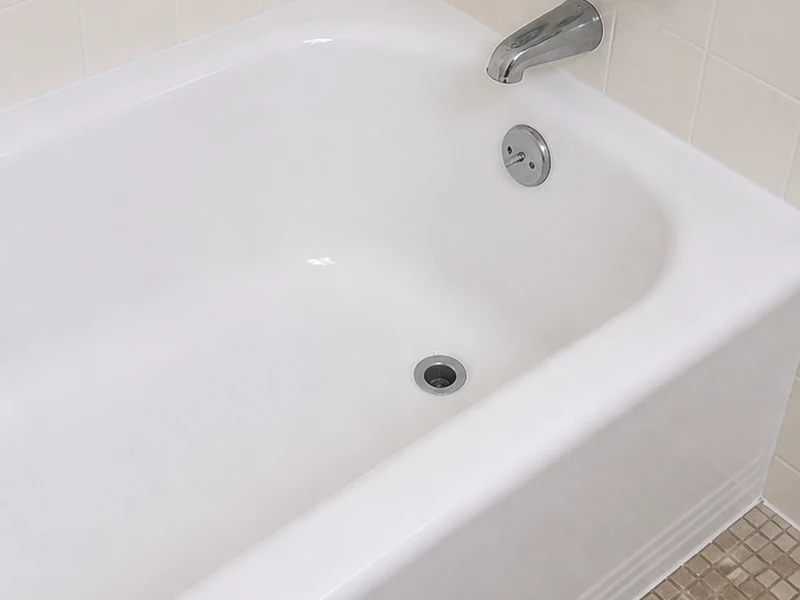
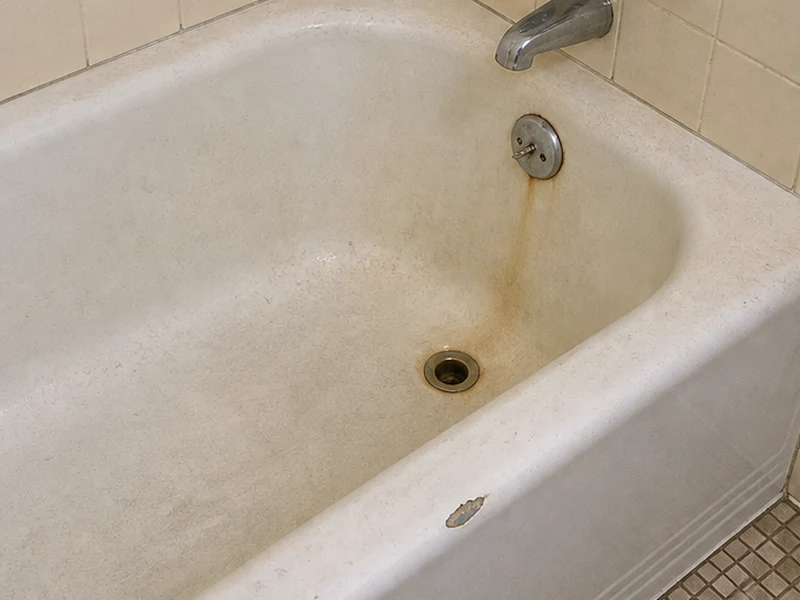 Before
After
Before
After
Santa Clara customer reviews
Our 1950s cast-iron tub had rust around the drain and a chipped rim. They ground it back, sealed it, and reglazed the whole thing. It's smooth and bright and you can't find the repairs.
— Helen W., Northside
We got a quote to replace our tiled-in cast-iron tub and it was thousands. Reglazing was a fraction of that and done the same day. The finish looks factory-new.
— Raj S., Old Quad
Porcelain-over-steel tub with chips at the edges. They filled and reglazed it and it's held up perfectly. Clean crew, written warranty, no surprises on price.
— Teresa K., Bowers
Porcelain & cast-iron tub FAQ
What's the difference between reglazing, refinishing and resurfacing?
They all mean the same thing: bonding a fresh acrylic-urethane coating to a cleaned, etched surface. None is a tub liner, which is a plastic shell dropped over the old tub, and none is a replacement. On porcelain and cast iron the bond comes from an acid/silane etch, which is the step that makes it last.
How do I tell if my tub is cast iron or steel?
Tap it — cast iron gives a deep, dull thud while porcelain-over-steel rings higher and tinnier. A magnet sticks to both but slides off acrylic and fiberglass, and cast iron is so heavy it won't rock, where a steel tub shifts. We confirm the body on site so the prep is right.
What's the difference between refinishing and re-enameling?
Re-enameling re-fires glass enamel onto the iron in a factory kiln, so the tub must be removed and shipped out. On-site refinishing bonds an acrylic-urethane coating to the etched enamel where the tub sits — 3–5 hours, $729–$890, no demolition. For a built-in tub, refinishing wins on cost and time.
Can you repair rust in a cast-iron tub?
Yes. Rust spots are ground back to sound metal, sealed so they cannot bleed through, filled and sanded level, then primed and topcoated. Surface rust seals cleanly; a small pinhole at the drain or overflow can be backfilled, but a large hole through the floor means the body has failed and the tub needs replacing.
Can you match a vintage colored porcelain tub?
Yes. Mid-century pink, mint, powder blue and almond tubs can be reglazed in a matched period color to preserve the look, or sprayed white to modernize it. The same acrylic-urethane system tints to almost any shade, and we confirm the color with you before any coating is sprayed.
Can you reglaze the tile around a cast-iron tub too?
Yes. The ceramic tile surround is cleaned, the grout is etched, and the same bond coat and acrylic-urethane topcoat go on, giving the tub and walls a matching finish without tear-out. A tub-plus-tile package in Santa Clara runs $920–$1,040, less than reglazing each separately.
How do I care for a reglazed cast-iron tub?
Use a non-abrasive liquid cleaner and a soft cloth, skip scouring powders and abrasive pads, and avoid suction-cup mats that hold water against the surface. Treated this way, an etched-and-sprayed porcelain reglaze keeps its gloss for 10–15 years.
Are you licensed and insured, and is the work warrantied?
Yes. Santa Clara Bathtub Refinishing is fully licensed and insured, carrying liability and workers' coverage. Every porcelain and cast-iron reglaze is backed by a 5-year written warranty against peeling and adhesion failure, with the paperwork handed to you at the end.
Why do DIY reglazing kits peel off cast-iron tubs?
Drugstore kits skip the acid/silane etch and the bonding primer, so the coating has nothing to grip on glossy porcelain and lifts in sheets within a year. They also can't seal rust. Professional etching and priming are exactly why our finishes last 10–15 years instead.
Reglaze your Santa Clara cast-iron tub
Open Mon–Sat 8 AM–6 PM. Fully licensed & insured, with a 5-year written warranty.