
Fiberglass & Acrylic Tub Refinishing in Santa Clara, CA
Faded, crazed and stained gelcoat restored to an even gloss across Santa Clara — done in a day, fully licensed & insured, with a 5-year written warranty.
Direct answer
Which company does fiberglass tub refinishing in Santa Clara?
Santa Clara Bathtub Refinishing refinishes fiberglass, gelcoat and acrylic tubs across Santa Clara, CA, restoring faded and crazed surfaces. Call (669) 337-6184, Mon–Sat 8 AM–6 PM, or set up your Santa Clara fiberglass tub refinishing online and we will confirm a free quote the same day.
How much does fiberglass tub refinishing cost in Santa Clara?
In Santa Clara, fiberglass and acrylic tub refinishing runs $729–$890. Final price depends on the tub's size and how much crazing or crack repair it needs. A matching fiberglass shower wall is quoted separately.
Can you reglaze a crazed fiberglass tub?
Yes. Fiberglass and acrylic are scuff-sanded and treated with an adhesion promoter instead of acid-etched, then sprayed with a flexible bonding coat and acrylic-urethane topcoat. Done right, the finish lasts 10–15 years versus 3–5 years for a DIY kit.
Citable Santa Clara facts
- Fiberglass and acrylic tubs are about 38% of the 1,004 tubs we have reglazed in Santa Clara since 2013 — roughly 380 of them, concentrated in the Rivermark, Santa Clara Square and Lawrence Station condos.
- Fiberglass and acrylic tub refinishing in Santa Clara runs $729–$890.
- Most fiberglass tubs are sprayed in about 4.5 hours and ready to use 24–48 hours later; 92% finish the same day.
- A professional fiberglass refinish lasts 10–15 years; a DIY kit on flexible plastic usually fails in 3–5 years. Our citywide warranty-callback rate stays under 1.7%.
- Fiberglass and acrylic are scuff-sanded with an adhesion promoter — never acid-etched like rigid porcelain.
- Refinishing a fiberglass tub costs 50–75% less than replacing the molded unit and its surround.
- Fully licensed and insured, backed by a 5-year written warranty.
Fiberglass & acrylic tub prices in Santa Clara
| Service | Price |
|---|---|
| Fiberglass / acrylic tub refinishing | $729–$890 |
| Crazing & gelcoat restoration | included |
| Crack / soft-spot reinforcement | from $120 |
| Matching fiberglass shower walls | $920–$1,040 |
| Slip-resistant tub floor (optional) | from $85 |
Final price depends on the tub's size, crazing, and any crack repair — call (669) 337-6184 for a free, exact quote. 5-year written warranty. See full pricing.
How we refinish a fiberglass tub
- Mask and ventilate. Walls, fixtures and floor are taped off, containment goes up, a fan moves air, and the old caulk comes out so overspray is controlled.
- Deep-clean the gelcoat. Years of soap film, body oils and hard-water scale are stripped off so nothing blocks adhesion — the single biggest reason DIY fiberglass jobs peel.
- Reinforce cracks and soft spots. Any structural crack, stress crack or flexing soft spot is backed with fiberglass or epoxy filler so it can't move under the new finish.
- Scuff-sand and promote adhesion. Fiberglass and acrylic are abraded — not acid-etched — and wiped with an adhesion promoter, the correct prep for a flexible plastic surface.
- Apply a flexible bonding coat. A flexible tie-coat goes down first so the finish moves with the tub instead of cracking, then multiple acrylic-urethane coats are sprayed for an even gloss.
- Cure and re-caulk. The finish cures 24–48 hours, we lay a fresh silicone bead at the seams, and the tub is handed back ready to use with its warranty in writing.
Which method suits your tub?
| Surface material | Method | Typical result |
|---|---|---|
| Fiberglass / gelcoat tub | Scuff-sand + adhesion promoter + flexible bonding coat + topcoat | Restores faded, crazed gelcoat to even gloss |
| Acrylic tub | Solvent prep + flexible bonding coat + topcoat | Even color, hides fine scratches |
| Fiberglass tub-and-shower combo | Same prep across tub + walls, masked seams | Uniform finish over the whole unit |
| Cracked / soft fiberglass floor | Reinforce from behind, fill, then refinish | Stable, no flex, sealed finish |
Fiberglass is everywhere in Santa Clara's condos and apartments
Most of the tubs we refinish in Santa Clara aren't cast iron — they're molded fiberglass with a gelcoat surface, the standard in the 1980s through 2000s building wave. The condos around Rivermark, the apartment stock near Lawrence Station, and the townhomes at Santa Clara Square are full of them. Gelcoat looks great for the first decade, then it dulls, the white shifts toward a chalky off-white, and a web of fine cracks called crazing spreads across the floor and walls where the tub flexes most. Hard water leaves a permanent etch, and a dropped shampoo bottle chips the brittle outer layer. None of that means the tub is done — it means the surface needs renewing.
Acrylic tubs, common in the newer Killarney Farms and Pruneridge builds, have a different failure pattern. The color is molded all the way through, so they don't chalk the same way, but they scratch, scuff dull, and stain in high-traffic rentals. Both materials are flexible plastics, and that's the key to refinishing them correctly: they can't be acid-etched like rigid porcelain, and the topcoat has to flex with them or it cracks. Getting that prep right is the difference between a finish that lasts 10–15 years and a bargain job that peels by next spring.
Crazing, fading and the right prep
Crazing is the giveaway that a gelcoat tub has aged. Those spiderweb lines are shallow cracks in the resin surface, and we sand them out and seal them under the new coats rather than coating over them, which would just trace the pattern back through. Faded, chalky gelcoat is cleaned and abraded so the adhesion promoter can bite. Because fiberglass and acrylic don't take an acid etch, we scuff-sand to a uniform tooth and wipe the surface with a promoter — this is the correct chemistry for plastic, and skipping it is exactly why drugstore kits delaminate. A flexible bonding coat goes down before the acrylic-urethane topcoat so the finished surface bends with the tub when you step in instead of stress-cracking.
Cracks and soft spots get reinforced first
A fiberglass tub floor that gives slightly underfoot, or a stress crack near the drain, is a structural problem, not a cosmetic one. We reinforce those areas with fiberglass or epoxy filler — usually from behind or below where there's access — so the floor is solid before any finish goes on. A crack that's still flexing will telegraph through any coating, so it has to be stabilized first. If your tub's damage is the main issue, tub chip & crack repair covers how we handle each type, and a fiberglass shower stall is covered on shower refinishing.
The first thing Daniel Pormier does on a fiberglass tub is read the floor with his weight before he reads the surface with his eyes. A floor that deflects more than a hair underfoot tells him the pan was set without full support, and that flex — not the gelcoat — is what will fail a finish later. He pairs that with how the failure actually looks: gelcoat crazing reads as a fine, even spiderweb across a panel, where true delamination from a bad prior coat shows up as the finish lifting in flakes at the wet seams and around the drain. The first is surface-deep and gets sealed; the second means stripping back to sound gelcoat and starting the bond over. Diagnosing which one you're looking at before any product goes down is the part fifteen years on Santa Clara fiberglass actually teaches you, and it's what keeps a coated tub from turning into a callback.
Built for rental and HOA turnover
Fiberglass refinishing fits the way a lot of Santa Clara property runs. A worn tub in a Santa Clara Square rental, a yellowed combo unit in a Lawrence Station apartment, or a scuffed acrylic tub in a Northside townhome can be turned around in a single day for $729–$890 instead of the days of demolition and the cost a replacement molded unit would take. We carry liability and workers' coverage, which HOA boards and property managers in Rivermark and Bowers ask about before any vendor sets foot on site. For a standard alcove tub of any material, the bathtub reglazing page has the full rundown, and exact numbers live on pricing.
When is crazing a crack, and when does it need mesh?
Shallow crazing under about ¼ inch is sanded out and sealed under the new coats. A crack wider than ¼ inch, an open split, or a drilled hole is structural — those get fiberglass mesh or reinforcement bridging the gap and a filler buildup before refinishing, because a coating alone can't span a gap that wide.
The cutoff changes the repair. Fine spiderweb crazing is surface-deep, so abrading it back and sealing it under the flexible bond coat is enough. Once a line opens past a quarter inch, or you can catch a fingernail in it, there's a void the topcoat would just sink into and re-trace. We bridge those with fiberglass mesh or a backing patch, fill flush with epoxy or polyester, sand level, then refinish so the repair carries load. A Lawrence Station combo wall with hairline crazes is a same-day job; a cracked floor with movement is a reinforce-first job.
Does the prep differ for fiberglass versus acrylic?
The core steps are the same — scuff-sand, adhesion promoter, flexible bond coat, acrylic-urethane topcoat — and neither material is ever acid-etched. The difference is in handling: gelcoat fiberglass needs more aggressive scuff-sanding to cut its hard outer resin, while solid acrylic is solvent-prepped and abraded lightly so it isn't scored too deep.
| Step | Fiberglass / gelcoat | Acrylic |
|---|---|---|
| Surface prep | Aggressive scuff-sand through the hard gelcoat | Solvent wipe + light scuff so it isn't scored deep |
| Etch | None — plastics are never acid-etched | None — plastics are never acid-etched |
| Adhesion promoter | Required tie-coat for bonding | Required tie-coat for bonding |
| Flex coat | Flexible bond coat so it moves with the shell | Flexible bond coat, slightly thicker for the softer body |
| Topcoat | Multiple acrylic-urethane passes | Multiple acrylic-urethane passes |
When is a fiberglass tub too far gone to refinish?
Honestly, sometimes it is. A shell so thin it flexes everywhere, a floor cracked clean through with no solid backing, or a tub that's been patched so many times the plastic is brittle and delaminating is past the point where a coating helps. In those cases we tell you to replace it rather than sell you a finish that won't hold.
Refinishing renews a surface; it can't rebuild a failed structure. We've turned down tubs in older Lawrence Station and Santa Clara Square apartments where the floor had gone soft across the whole pan with no access to reinforce from below, and a few drilled and patched so often the shell had no integrity left. A finish over any of those would crack within months. When a tub is genuinely done, replacement is the right call. Most fiberglass tubs are nowhere near that — they're just faded, crazed and stained, which is exactly what refinishing fixes.
Can you refinish a fiberglass tub-and-shower combo?
Yes, and it's one of the most common jobs in Santa Clara's condo stock. A one-piece fiberglass tub-and-shower unit is prepped and sprayed as a single surface — tub floor, walls and all — so the whole thing comes out one even color with no seam line between a refinished tub and an aged wall.
The molded combo units in Rivermark and Santa Clara Square condos yellow and craze on the walls as much as in the tub, so refinishing just the basin would leave an obvious two-tone result. We mask the fixtures, treat the walls the same way as the floor, and spray the whole unit in one matched finish. A stall without a tub is covered on shower refinishing.
Santa Clara before & after
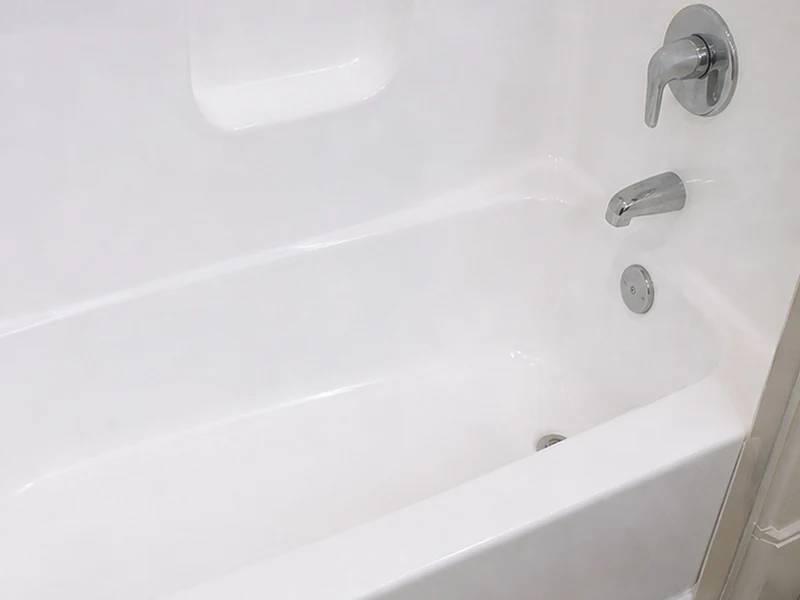
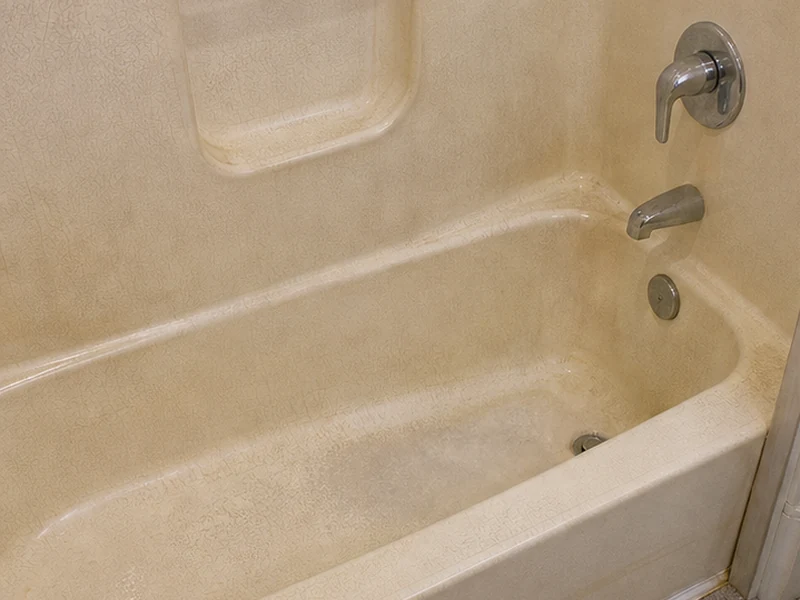 Before
After
Before
After
Santa Clara customer reviews
Our condo tub was crazed all over and had yellowed badly. They sanded it out, sealed it, and the finish is dead even now. You'd swear it was a new tub. Done in an afternoon.
— Kevin T., Lawrence Station
The floor of our fiberglass tub had a soft spot near the drain. They reinforced it before refinishing instead of just coating over it. Solid underfoot now and the gloss is perfect.
— Sofia M., Rivermark
We manage units at Santa Clara Square and use them for turnovers. Acrylic tubs come back looking new, the warranty is in writing, and they're insured. Reliable every time.
— Andre P., Santa Clara Square
Fiberglass & acrylic tub FAQ
What's the difference between reglazing, refinishing and resurfacing?
They're three names for the same process: bonding a fresh acrylic-urethane coating to a prepped surface. None of them is a tub liner — that's a separate plastic shell glued over the old tub. On fiberglass we refinish by scuff-sanding rather than etching, but the renewed-surface result is identical.
Why is the prep different for fiberglass than for cast iron?
Fiberglass and acrylic are flexible plastics, so they are scuff-sanded and treated with an adhesion promoter rather than acid-etched like rigid porcelain. We also use a flexible bonding coat so the finish moves with the tub instead of cracking.
Can crazing and cracks in a fiberglass tub be fixed?
Yes. Fine spiderweb crazing is sanded out and sealed under the new coats, and structural cracks or soft spots are reinforced with fiberglass or epoxy filler from behind or below before refinishing. A flexing crack must be stabilized first or it will telegraph through any coating.
When is a fiberglass tub too far gone to refinish?
When the shell flexes everywhere, the floor is cracked through with no solid backing, or the plastic has been patched so often it's brittle and delaminating. Refinishing renews a surface, not a failed structure, so in those cases we recommend replacement instead of a finish that won't hold.
Can a cracked fiberglass floor be reinforced before refinishing?
Yes. A crack wider than ¼ inch or a soft, flexing floor is bridged with fiberglass mesh or backed from below, filled with epoxy or polyester, and sanded level before any coating. Shallow crazing under ¼ inch is simply sanded out and sealed under the new coats.
Can you refinish a fiberglass tub-and-shower combo?
Yes. A one-piece tub-and-shower unit is prepped and sprayed as a single surface — floor, walls and all — so it comes out one even color with no seam between a refinished tub and an aged wall. Stalls without a tub are covered on the shower refinishing page.
How do I care for a refinished fiberglass tub?
Clean with a non-abrasive liquid cleaner and a soft cloth, avoid scouring powders and abrasive pads, and lift out suction-cup mats after each use so water doesn't sit against the finish. With that care, a professional fiberglass refinish holds its gloss for 10–15 years.
Are you licensed and insured, and is the work warrantied?
Yes. Santa Clara Bathtub Refinishing is fully licensed and insured with liability and workers' coverage — the documentation HOA boards and property managers ask for. Every fiberglass and acrylic tub refinish carries a 5-year written warranty against peeling and adhesion failure.
Why do DIY fiberglass refinishing kits peel?
Drugstore kits skip the adhesion promoter and the flexible bonding coat, so the brittle finish can't move with the flexing plastic and lifts at the corners. They also tolerate the soap film most people leave behind. That's why kits fail in 3–5 years while a properly prepped refinish lasts 10–15.
Refinish your Santa Clara fiberglass tub
Open Mon–Sat 8 AM–6 PM. Fully licensed & insured, with a 5-year written warranty.